Source Modern Stackable Tolix Dining Chair for Hotels, Homes, and Events
Explore 30 listings for the modern stackable Tolix dining chair, featuring metal construction and various styles. Compare specifications like seat thickness, back height, and packing details to find the right fit for your hospitality or residential needs; compare the available evidence and request quotations based on your requirements.
Key considerations
Products List




Comprehensive Sourcing Guide
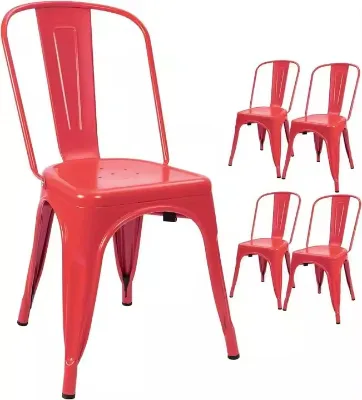
Modern Stackable Tolix Dining Chair Sourcing Guide
Sourcing modern stackable Tolix-style dining chairs requires a clear understanding of the distinction between authentic heritage pieces and contemporary mass-produced interpretations. The term "Tolix" originally refers to a specific French manufacturer, but in global B2B markets, it has become a generic descriptor for galvanized steel chairs with a distinct industrial aesthetic. Buyers must navigate this ambiguity by focusing on specific design attributes rather than brand names alone. The core appeal lies in the chair’s durability, stackability, and minimalist silhouette, which makes it suitable for both commercial hospitality environments and residential dining spaces. Understanding this market nuance is the first step in defining precise procurement requirements and avoiding miscommunication with suppliers who may use the term loosely.
Procurement teams should prioritize suppliers who offer customization options, as the modern market demands variations in finish, seat thickness, and structural reinforcement. The observed product landscape includes models with fixed rotary mechanisms, round shapes, and specific packaging configurations that impact logistics costs. Buyers need to evaluate whether the supplier provides OEM services, as this often indicates a higher level of manufacturing capability and flexibility. Additionally, the presence of "nude packing" or standard carton packaging options suggests varying levels of protection during transit, which directly influences the risk of damage upon arrival. Clarifying these details early in the inquiry process ensures that the final product aligns with both aesthetic expectations and practical handling requirements.
Product Scope and Observed Listing Signals
The current market for modern stackable dining chairs exhibits a wide range of price points, typically observed between five and ninety US dollars per unit. This variance reflects differences in material quality, manufacturing complexity, and order volume. Buyers should note that the minimum order quantity (MOQ) generally ranges from fifteen to two hundred pieces, allowing for flexibility in initial trial orders versus large-scale deployments. The observed product attributes include a "New" condition status and a "Customized" capability, indicating that suppliers are willing to adapt designs to specific client needs. This flexibility is crucial for brands seeking unique finishes or structural modifications that differentiate their offerings in a crowded market.
Listing signals also reveal a strong emphasis on style and application, with many products categorized under "Modern," "Light Luxury," and "Simple" aesthetics. The intended usage spans hotel and home environments, suggesting versatility in design that appeals to diverse buyer segments. Specific models identified in the market include the TC-01, RF1510SC, and AR-C050 series, each with distinct packaging and dimensional specifications. For instance, some units are packed in stacks of twelve or sixteen pieces, while others use carton packaging with five pieces per box. These logistical details are critical for calculating freight costs and warehouse storage requirements, making them essential factors in the total cost of ownership analysis.
Technical Specifications to Verify
When evaluating technical specifications, buyers must scrutinize the material composition and structural integrity of the steel frame. The observed products are primarily constructed from metal, with seat thicknesses noted at 2.0mm for certain models. This thickness is a key indicator of durability, as thinner gauges may lead to bending or deformation under heavy use. Additionally, the back height classification, such as medium or low back, affects both comfort and stackability. Buyers should verify the exact dimensions of the chair, including seat width, depth, and overall height, to ensure compatibility with existing table sets and spatial constraints. Standard specifications like 45x45x260cm or 36x44x72cm provide a baseline, but custom dimensions may be available for specialized projects.
The presence of armrests and the style of the seater, such as European or modern styles, further define the product’s functionality and aesthetic appeal. Some models are designed without armrests to facilitate easier stacking and space efficiency, while others include armrests for enhanced comfort in lounge or leisure settings. The color options, ranging from blue to white and black, allow for customization to match interior design schemes. Buyers should also confirm the folding status, as most modern stackable chairs are designed to remain unfolded for stability, though some may offer foldable features for storage. Verifying these details through sample requests or detailed technical drawings is essential to prevent discrepancies between the ordered product and the delivered goods.
Compliance and Safety Documentation
Compliance with international safety standards is paramount for dining furniture, particularly in commercial settings where high traffic and frequent use are expected. Buyers should request documentation that verifies the structural stability of the chair, including load-bearing tests and tip-over resistance assessments. While specific certification names may vary by region, the underlying principles of safety remain consistent, focusing on the prevention of accidents and injuries. Suppliers should be able to provide test reports from accredited laboratories, demonstrating that the chairs meet relevant national or international standards for furniture safety. This documentation is not only a legal requirement in many markets but also a critical component of risk management for procurement teams.
In addition to structural safety, buyers must consider the environmental and chemical compliance of the materials used in the chair’s construction. The galvanized steel finish and any applied coatings should be free from harmful substances such as lead, mercury, or excessive volatile organic compounds (VOCs). Requesting material safety data sheets (MSDS) and compliance certificates for the paint or powder coating ensures that the product meets environmental regulations in the destination market. Furthermore, buyers should verify that the supplier adheres to ethical manufacturing practices, as this is increasingly important for brand reputation and consumer trust. Ensuring comprehensive compliance documentation protects the buyer from potential legal liabilities and enhances the overall quality assurance process.
Cost Drivers and Commercial Terms
Several factors influence the final cost of modern stackable dining chairs, with material costs, labor, and logistics being the primary drivers. The price range of five to ninety US dollars reflects these variables, with higher prices typically associated with thicker steel gauges, complex finishes, or smaller order volumes. Buyers should analyze the cost structure to understand where value is added, such as in the customization of colors or the inclusion of premium packaging. The minimum order quantity of 15-200 pieces also plays a significant role, as larger orders often benefit from economies of scale, reducing the per-unit cost. Understanding these dynamics allows buyers to negotiate more effectively and align their procurement strategy with budget constraints.
Commercial terms, including delivery time and payment conditions, are equally important in the total cost calculation. The observed delivery times range from 15 to 30 days, depending on the order size and customization requirements. Buyers should factor in lead times when planning inventory levels to avoid stockouts or excess holding costs. Packaging options, such as nude packing or standard cartons, also impact freight costs, as more compact packaging can reduce shipping volume and associated expenses. Additionally, buyers should clarify any additional fees for customization, tooling, or sample production, as these can add unexpected costs to the procurement process. Transparent commercial terms ensure that the final invoice aligns with the initial quotation, preventing financial surprises.
Supplier Qualification and Quality Control
Selecting the right supplier is critical to ensuring the quality and reliability of modern stackable dining chairs. Buyers should conduct thorough due diligence, verifying the supplier’s manufacturing capabilities, production capacity, and quality control processes. Suppliers located in key manufacturing hubs like Tianjin and Foshan, Guangdong, China, often have established supply chains and expertise in metal furniture production. However, location alone is not a guarantee of quality, so buyers must assess the supplier’s track record, client references, and adherence to international business practices. Requesting factory audits or third-party inspections can provide valuable insights into the supplier’s operational efficiency and commitment to quality.
Quality control measures should be integrated into the procurement process from the initial sampling stage to final shipment. Buyers should define clear quality standards, including acceptable tolerances for dimensions, finish, and structural integrity. Implementing a pre-shipment inspection (PSI) protocol ensures that any defects are identified and addressed before the goods leave the factory. Additionally, buyers should establish a clear communication channel with the supplier to address any issues that arise during production. Regular updates and feedback loops help maintain alignment between the buyer’s expectations and the supplier’s output. By prioritizing supplier qualification and rigorous quality control, buyers can mitigate risks and ensure a consistent supply of high-quality products.
Long-Term Procurement Checks
Long-term procurement success depends on establishing a sustainable relationship with suppliers and continuously monitoring performance. Buyers should implement a supplier scorecard system to track key performance indicators such as on-time delivery, product quality, and responsiveness to issues. Regular reviews of these metrics help identify areas for improvement and reinforce accountability. Additionally, buyers should stay informed about market trends and technological advancements in furniture manufacturing, as these can impact product availability and pricing. Engaging in periodic negotiations and exploring alternative suppliers can also help maintain competitive pricing and reduce dependency on a single source.
Sustainability and ethical considerations are increasingly important in long-term procurement strategies. Buyers should assess the supplier’s environmental policies, waste management practices, and labor standards to ensure alignment with corporate social responsibility goals. Requesting updates on any changes in manufacturing processes or material sourcing helps maintain transparency and trust. Furthermore, buyers should plan for product lifecycle management, including end-of-life disposal or recycling options for the chairs. By focusing on long-term checks and continuous improvement, buyers can build a resilient supply chain that supports their business objectives and adapts to changing market conditions.
FAQs
What customization options are available for these dining chairs?
Customization is available for these dining chairs, allowing buyers to request specific designs. The product supports OEM custom orders and offers standard or customized packaging options. Buyers can choose from various styles including modern or antique finishes to match their specific interior requirements.
How long does delivery take for these modern stackable chairs?
Delivery typically takes between 15 to 30 days depending on the specific model ordered. Some listings indicate a standard lead time of 25 to 30 days for production and shipping. Buyers should confirm exact timelines with the supplier based on their selected model and order quantity.
Which materials are used to construct these dining chairs?
These dining chairs are constructed using metal materials to ensure durability and stability. The frames are designed with specific dimensions like 45 by 45 centimeters for certain models. This material choice supports the modern and light luxury aesthetic while maintaining structural integrity for hotel and home use.
Can I order these chairs with armrests or without them?
Yes, you can order these chairs with or without armrests depending on your preference. Some models are specified as having no armrests, while others feature armrests for added comfort. This flexibility allows buyers to select the configuration that best fits their dining space or commercial application needs.
What is the minimum order quantity for these dining chairs?
The minimum order quantity varies by model, ranging from 15 to 200 pieces in observed listings. Specific models like the RF1715SC require a minimum of 100 pieces. Buyers should verify the exact MOQ for their chosen model before placing an order to ensure compliance with supplier requirements.
How are these chairs packaged for shipping and transport?
Packaging options include standard packaging, customized solutions, or nude packing depending on the supplier. Some models are packed as 12 pieces per stack, while others use carton packaging with specific counts like 5 pieces per carton. This ensures safe transport while allowing flexibility for different shipping needs.
Where are these dining chairs manufactured and shipped from?
These dining chairs are manufactured in China, with specific origins in Tianjin and Foshan, Guangdong. The products are shipped from these locations to international buyers. Buyers can expect goods to originate from these established manufacturing hubs known for furniture production and export capabilities.